The ABC islands (Aruba, Bonaire, and Curaçao) performed by undersea volcanic irruption’s. Lava and ash forced their way to the surface, creating islands. The first inhabitants were the Caiquetio Indians, an offroot of the Arawak tribe originally from Venezuela. In 1499,Alonso de Ojeda and Amerigo Vespucci (part of the Columbus voyages of discovery) claimed the islands on behalf of the Spanish crown. They were quick to name the islands useless islands. The natives were taken captive as slaves and were relocated to Hispaniola the future Haiti and Dominican Republic to work the plantations, and Bonaire was left largely uninhibited. Up to 1526, Bonaire had few inhabitants. A number of first immigrants settled on the island, mainly consisting of convicted criminals from South and Central America. They made their home in the town of Rencon, located in a valley and therefore safe from attacks by pirates and robbers. Up to 1816, Bonaire change hands a number of times Spain Britain and the Netherlands all occupied the island in turn.
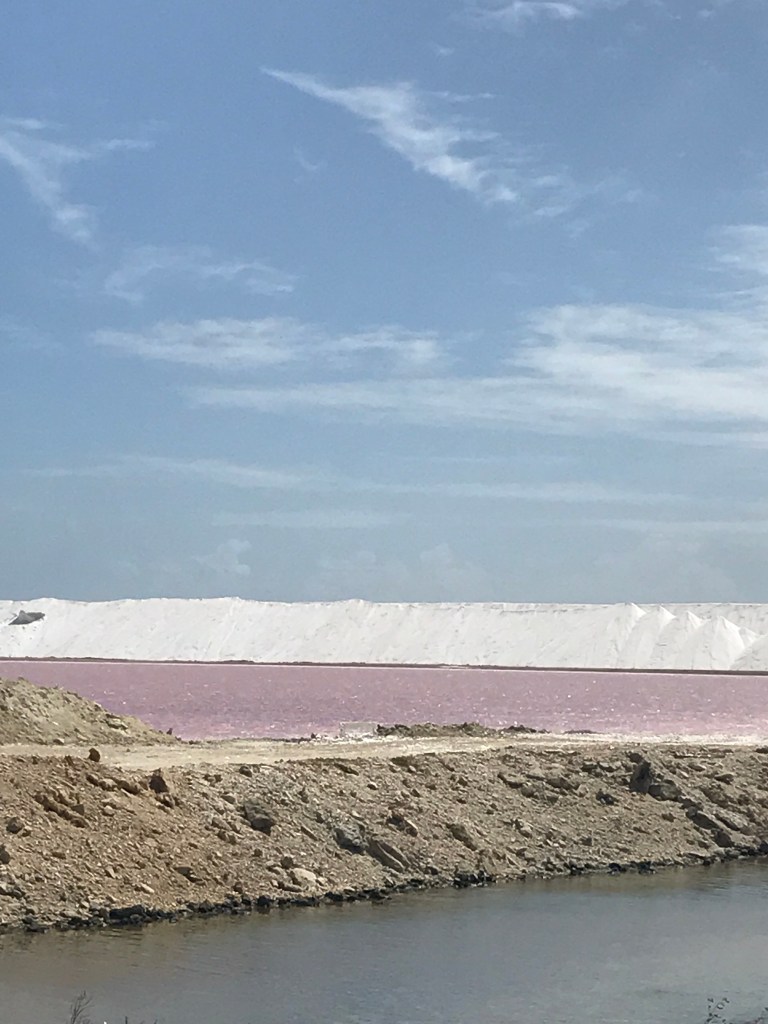
Salt has been extracted on Bonaire for centuries. By leaving saltwater in salt-pans and allowing the water to evaporate, salt is extracted using a fairly simple procedure. These activities mostly take place on the south western part of the island. During the 14th century, demand for salt in Europe increased drastically when William Beukelzoon, From the Netherlands discovered how to properly gut herring. He found that if herring was relieved of its gills and intestine, but not of its pancreas and then salted it remain fresh for much longer. This major step forward in food processing and the demand for salt also shot up. Large amounts of salt were imported from Spain and Portugal until this became impossible because of the 80 year war. After 1600s more than 100 Dutch ships set sail for the Caribbean each year returning with more than 300,000 tons of salt between them. Slavery was abolished in 1863, ( those white slave houses in the pictures slept 6 people per house!!!) making salt extractions much less feasible and virtually putting an end to it. In 1966, the production of salt restarted and in 2000, salt production Rights were sold to the American Cargill Corporation. The colors were are created by different bacteria that are able to survive in varying salt content. These salts pans are an excellent example of economic and ecological harmony. The area is a flamingo reserve and is the most significant flamingo breeding area in the southern Caribbean.



 TRAVEL IS THE BEST EDUCATION