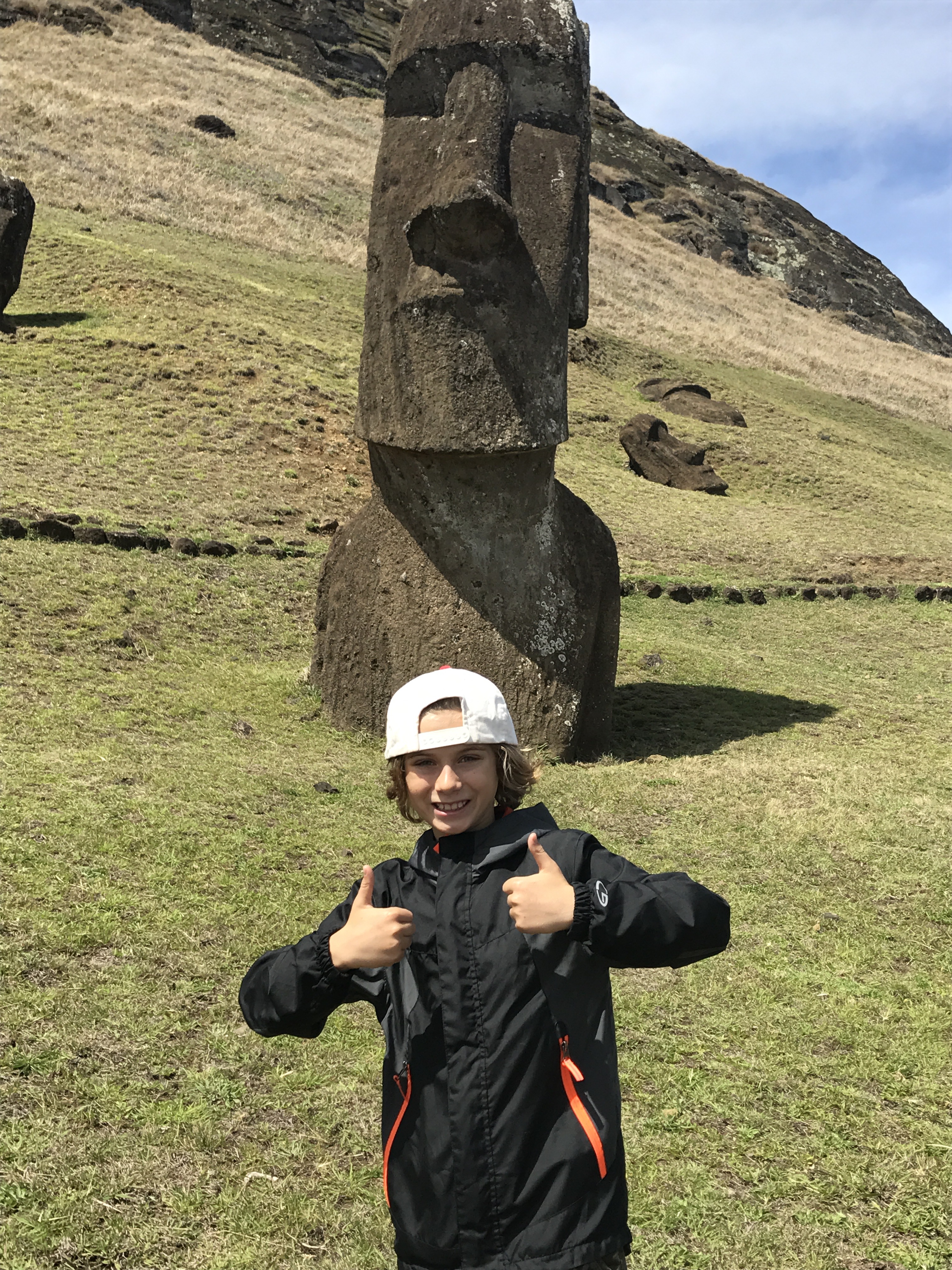
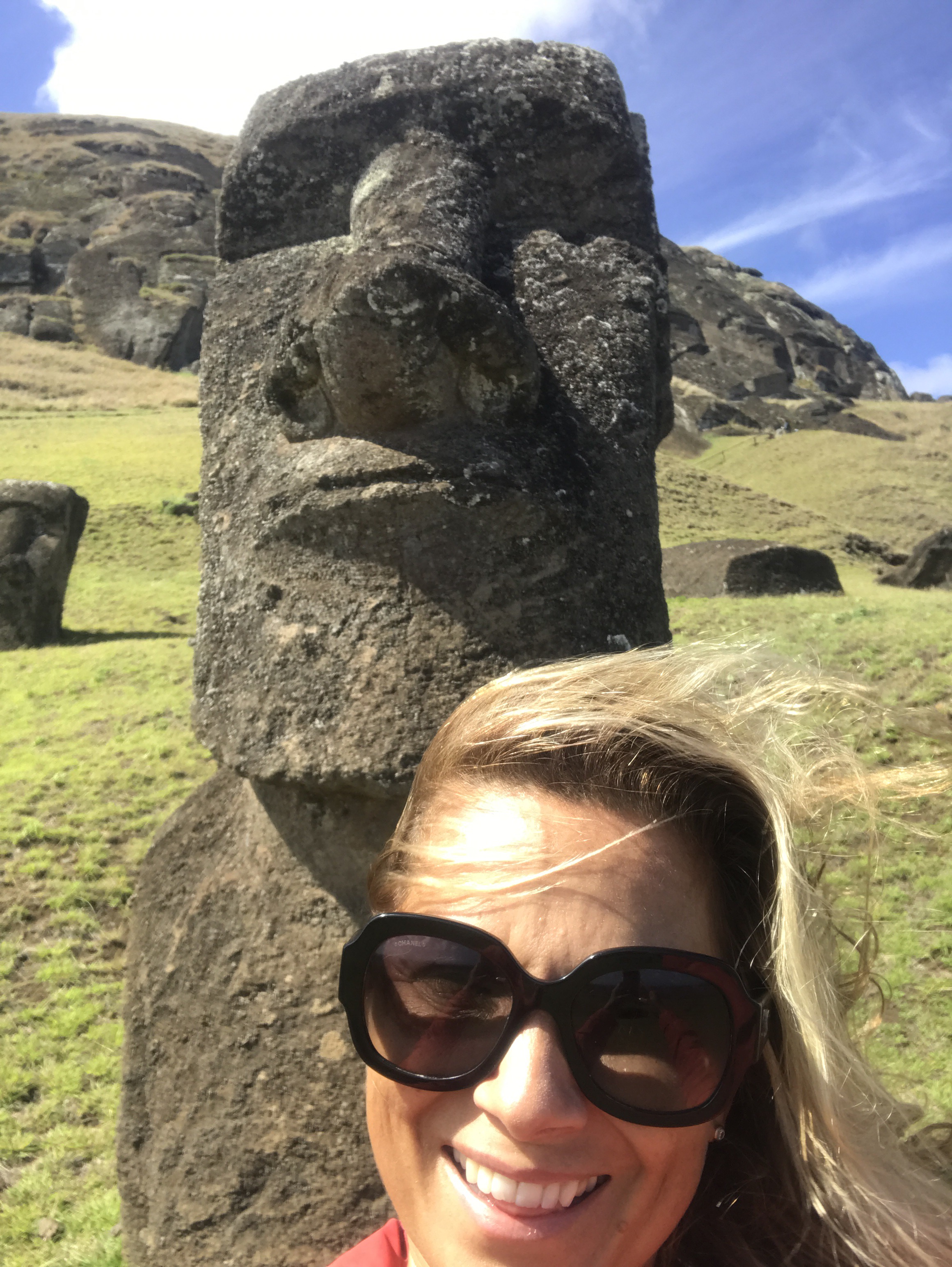
Amazing day visiting the quarry where the Moai were carved from.
Easter Island, also called Rapa Nui, is a Polynesian island in the Pacific Ocean.
The island became a special territory of Chile in 1888.
Easter Island is famous for having 887 massive statues, called moai, which were sculpted and erected by the early Rapa Nui people.
In 1995, Easter Island became a UNESCO World Heritage Site, with most of the island protected in the Rapa Nui National Park.
Easter Island had around 5,800 residents in 2012. Over 60% of these people are descendants of the native Rapa Nui people.
Polynesians are believed to have settled on the island around the first millennium AD. The thriving Rapa Nui people carved the large stone statues between 1100 -1680 AD and the population peaked at around 15,000 people during this time.
The introduction of Polynesian rats and overpopulation is believed to have led to deforestation of the native large broadleaf forests and palms and extinction of many natural resources such as native birds and seabirds. This led to internal warfare and the Rapa Nui civilization was reduced to just 2000-3000 people when the Europeans arrived in 1722. Diseases carried by sailors and Peruvian slave raiding caused the native population to fall to just 111 people in 1877.
The first recorded European visitor to the , Dutch explorer Jacob Roggeveen called the place “Easter Island” because he arrived on Easter Sunday, 5th April, 1722.
With the nearest inhabited island (Pitcairn Island) 2,075 km’s (1,289 mi) away and continental Chile 3,512 km’s (2,182 mi) away, Easter Island is one of the world’s most isolated inhabited islands.
Its a common misconception that the Easter Island statues are just heads (although some have been buried up to their necks over time). They in fact also have torsos, with most ending at the top of the thigh, while some are complete kneeling figures.
Nearly all the moai were carved from solidified volcanic ash at a quarry site on the side of the extinct Rano Raraku volcano. The carvers used basalt stone hand chisels, with many teams working on different statues at the same time. However, a single moai took a team of 5-6 men about a year to finish.
Each statue represented the deceased head of a family ancestry line.
Just one quarter of the statues were ever installed with nearly half still remaining at the quarry site and others sitting along the way to their intended locations.
The largest raised moai is called “Paro”. It weighs 82 tons and is 9.8 m (32.15 ft) tall. The average size of all the statues is 4m (13 ft) tall and 14 tons.
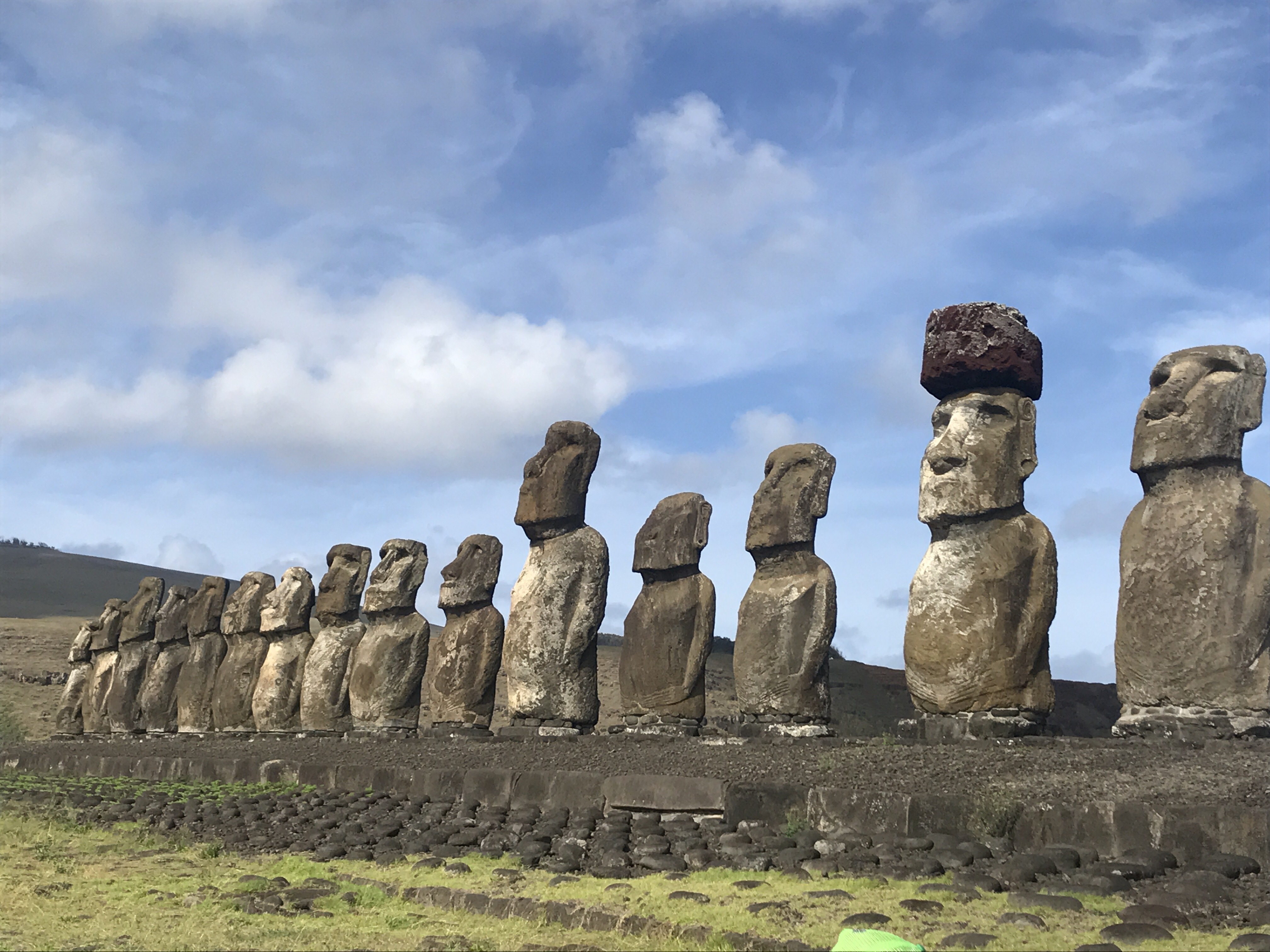
“Ahu” are stone platforms on which many moai sit. There are 313 known ahu and 125 of these carry moai. The biggest, Ahu Tongariki is 220 m (720 ft), and had the most (15) and tallest moai.



 TRAVEL IS THE BEST EDUCATION
Very informative and gorgeous!
LikeLiked by 1 person